


groundbreaking carbon-storing concrete sets pathway to net-zero in industry first
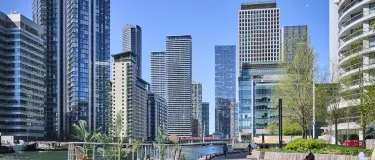
Holcim UK has partnered with Canary Wharf Group (CWG) and a host of top civil engineering consultancies and universities in a leading industry collaboration to produce a net zero concrete.

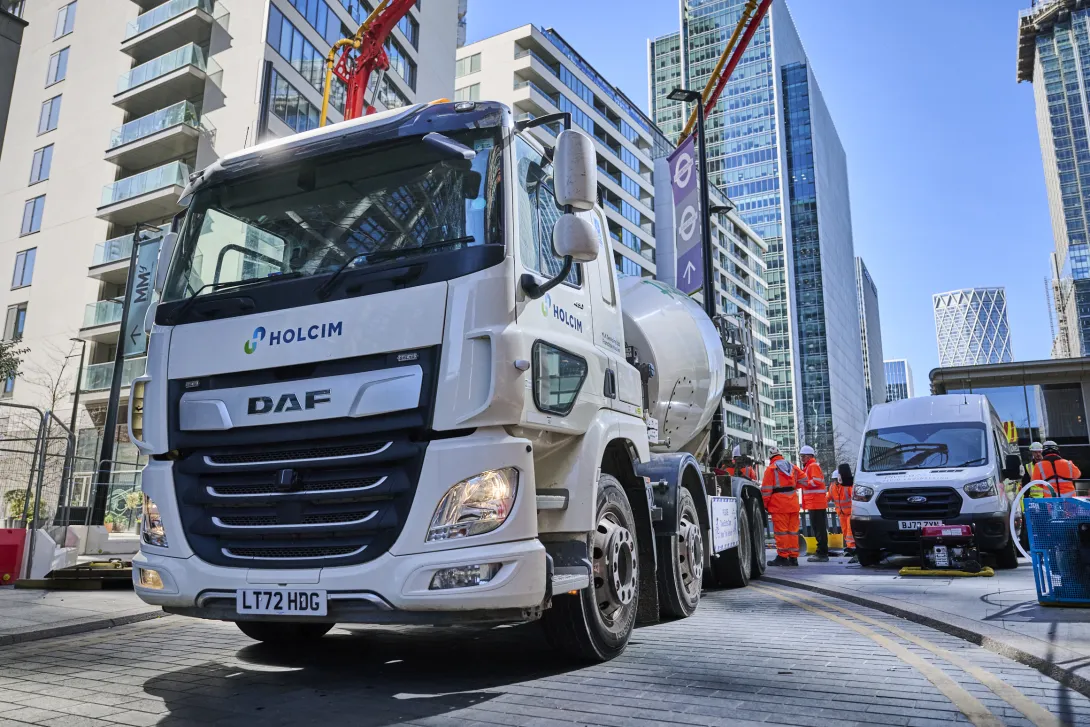
The leading sustainable building solutions provider helped design a series of ultra low-carbon and circular concrete mixes in partnership with CWG on Canary Wharf development projects over a period of six months.
The development projects demonstrate the performance and viability of the next generation low-carbon concrete (LCC), utilising innovative alternative materials such as biochar and graphene in the mixes. This research and development programme aims to accelerate the decarbonisation of construction and establish a clear pathway to market adoption.
Spearheaded by real estate developer CWG, Holcim joined together with a collective of industry experts to help solve the LCC equation including site contractors O’Halloran O’Brien and a collaboration of civil engineering and structural consultants: Arup, Ramboll, B&GE, Thornton Tomasetti, Walsh Associates, Robert Bird Group and experts from Queens University, Belfast and University of Cambridge.

The trial pours took place in April 2025 on a full-scale test slab beneath the new theatre venue in CWG’s Wood Wharf, followed by pours in September 2025 creating two-metre-deep raft slabs on its Bank Street site.
These two pours followed the early success of an innovative mix containing biochar produced from coppiced wood and spent coffee grounds collected from Canary Wharf coffee shops to create underwater in situ counterweights for the striking, 10m tall “Whale on the Wharf” public art sculpture in Wood Wharf.
The first tests saw the biochar recycled coffee grounds mix, developed alongside the Holcim Innovation Centre in Lyon, achieve an 80 percent reduction in net Global Warming Potential (A1–A3) compared to a traditional CEM I concrete, resulting in a projected combined fossil and biogenic GWP of 69 kgCO₂e/m³.
In the later trials in September, further optimisation of the coffee derived biochar mix resulted in a projected net GWP (A1–A3) of -14 kgCO₂e/m³ when fossil emissions and biogenic carbon storage are assessed together — resulting in a Holcim-first net zero concrete.*
When the biochar-coffee mix is added to concrete, the carbon absorbed by the trees and coffee plants during their earlier growth is locked into the concrete itself, acting as a carbon sink.**
Another key mix included the innovative material graphene and demonstrated a carbon reduction of more than 50 per cent compared to a CEM I control. It delivered higher strength and improved durability, thereby potentially reducing the amount of concrete required in certain applications and improving cover to reinforcement.
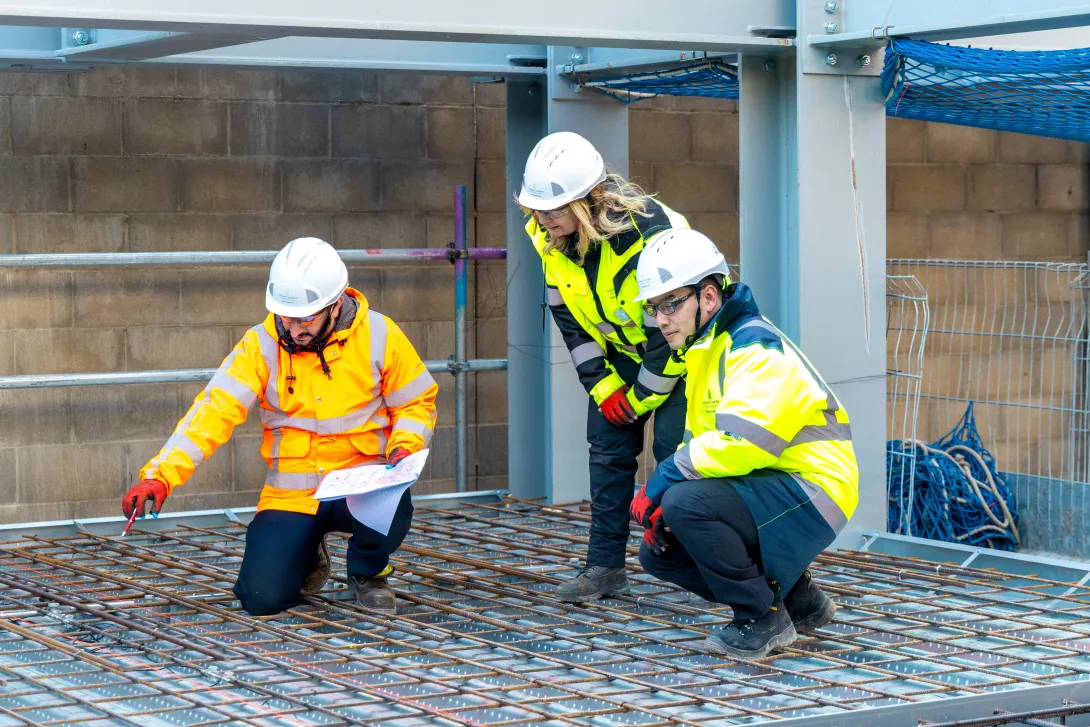
The materials are to be monitored and tested by CWG’s collective experts including Queens University Belfast, Skanska and Arup to establish how they behave over a two year period to obtain real life verified data which can be used to demonstrate its performance versus traditional concrete.
A final test mix included ECOCEM ACT alongside a control mix made up of a primarily CEM I mix containing Portland Cement.
Jasen Gauld, National Readymix Product Development Director for Holcim UK, said: “The aim of these trials was to show that next-generation concrete mixes can perform as well as, or better than, standard concretes – giving contractors and the wider supply chain confidence to adopt them and embedding circular thinking into the buildings we help create.
“By optimising the biochar-coffee mix, we have achieved net zero concrete – a Holcim first – while maintaining strength, durability, and circularity. Where increased binder might otherwise have been needed, our products can remove that requirement, reducing overall embodied carbon. At the same time, the carbon in the biochar is locked into the concrete, allowing buildings to fulfill a new role as long-term carbon stores, keeping CO₂ safely out of the atmosphere. This demonstrates that high-performance, low-carbon, circular materials are ready for real-world use.”
Jonathan Ly, Director of Structures at CWG, said: “This collaboration represents a pivotal moment for the real estate sector's transition to net zero. As both developer and main contractor, CWG occupies a unique position in the industry where we can validate next-generation materials on live projects at pace, allowing us to build the market confidence that low-carbon concrete needs to become mainstream.
“Achieving net-zero concrete with our biochar-coffee mix demonstrates that circular economy principles aren't just aspirational, they can deliver measurable environmental and commercial value. By transforming spent coffee grounds from our own retailers into a construction material that sequesters carbon, we're proving that sustainable development can be both ambitious and practical.”
Notes to editors
* The fossil and biogenic carbon contributions are quantified separately as part of the initial assessment, in line with current best practice guidance, recognising the importance of transparent carbon accounting for novel carbon-storing materials.
** The biochar used in the project was from two sources of waste biomass; forestry residues including UK coppiced fast growing hard woods and used coffee grounds as collected from Canary Wharf shops and cafés.
It allows the carbon to be securely stored in the fabric of the building for the entire life of the structure and beyond due to the long term stability of carbon in biochar. In effect, the built environment is transformed from a carbon source to a carbon sink, keeping CO₂ out of the atmosphere, rather than releasing it back.
Using biochar supports circular construction by turning locally sourced waste into valuable building ingredients, reducing the need for virgin materials and helping divert waste from landfill or incineration. The concrete can also later be recycled or repurposed as crushed aggregate for new construction.
Press contacts
Telephone
01530 510066
Email
"This demonstrates that high-performance, low-carbon, circular materials are ready for real-world use.”
- Construction Industry Leader Commits to Ambitious Sustainability Mission With Rebrand To Holcim UK
- Head office has a bright future after adopting solar power
- Glensanda 200 millionth tonne sets sail
- 2025 edie Awards: Holcim UK scoops double nomination
- Green shoots of growth start to flourish in sustainability efforts
- Holcim UK Welcomes First Ship To New Deep-Sea Cement Terminal at the Port of Southampton
- Key construction milestone reached with inflation of ground-breaking dome silo at Tilbury Docks
- Strengthening UK Infrastructure Resilience: Holcim UK Calls for Urgent Action Following ‘Biblical’ Rainfall