


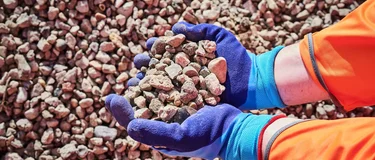
Recycled vs Primary Aggregates
A specifier’s guide to quality and standards
The construction industry’s conversation around recycled materials has moved on. Specifiers are now focused on guaranteeing consistency, compliance and performance at scale.
Net Zero targets and planning policy continue to push projects towards circular materials. At the same time, many engineers and procurement teams have experienced low-grade recycled fill from poorly regulated suppliers, where inconsistent grading, contamination and limited traceability have translated into avoidable technical and commercial risk.
While the environmental benefits of recycled aggregates are well-documented, the focus in 2026 has shifted to performance, consistency and structural integrity. Hesitation around recycled aggregates is therefore rarely ideological. It’s practical, rooted in concerns about reliability and risk exposure.
With rigorous testing, Specification for Highway Works compliance and verified circular systems, certified products now define modern recycled aggregates quality, reducing technical and commercial risk in the process.
For too long, the construction industry has equated 'recycled aggregates' with unregulated, unprocessed site waste, leading to understandable concerns about risk and reliability. But the reality of modern circular construction is entirely different. By applying rigorous Factory Production Control, strict WRAP Quality Protocols, and full specification compliance, we aren't just recycling rubble; we are engineering certified construction products. Specifiers no longer have to compromise on load-bearing capacity or structural integrity to meet their Net Zero targets. True performance is circular.
Key Takeaways
- Performance Equivalency: When engineered to precise grading envelopes, recycled aggregates deliver the same load-bearing capacity, compaction, and stability as primary quarried stone.
- Guaranteed Compliance: Materials like Holcim’s Recycled Type 1 meet SHW CC 201/8 (formally known as SHW Clause 803) for granular sub-base, matching the exact standards required for the national highway network.
- Legal and Technical Assurance: Adherence to the WRAP Quality Protocol transforms inert waste into a legally recognised construction product, mitigating contamination risks through strict Factory Production Control systems.
- Carbon and Cost Efficiency: Defaulting to virgin aggregates for every sub-base layer often over-engineers solutions, inflating material costs and unnecessarily consuming project carbon allowances.
- Verifiable Traceability: Enterprise-scale production is governed by ISO 9001, ISO 14001, and BES 6001 ('Very Good' rating), removing the variability and risk associated with unregulated, temporary site crushers.
- Next-Generation Circularity: Innovations like Holcim’s ECOCycle® integrate 10-100% independently verified construction demolition material directly into structural concrete and asphalt.
Is recycled aggregate lower quality than primary aggregate?
Much of the reputational problems facing recycled aggregates can be traced back to unprocessed site waste. Crushed brick and concrete, often produced on temporary crushing setups, typically contain high levels of fines, wood, plastics and inconsistent grading.
This material is frequently sold as ‘recycled aggregate’ despite having little in common with certified products.
Holcim’s recycled aggregates are produced from inert construction and demolition waste, primarily concrete and brick. The material is processed to defined grading envelopes and contaminant limits, not simply crushed and redistributed. Our recycled aggregates follow controlled industrial processes, including:
- Primary crushing and secondary screening
- Waste management protocols
- Removal of contaminants through magnetic separation
- Controlled stockpiling
- Routine laboratory testing
- Factory Production Control Systems
Why do specifiers still default to virgin primary aggregates?
Primary aggregates benefit from decades of institutional trust, with specifiers knowing what to expect from quarried stone. In complex projects, that familiarity reduces perceived risk.
In some high-stress applications, primary materials remain essential, but defaulting to virgin aggregate for every sub-base and fill layer often leads to over-engineered solutions. This increases embodied carbon, inflates material costs and consumes carbon allowances that could be better used elsewhere in the project.
In many cases, recycled aggregates that meet national performance standards deliver the same structural outcomes. But without unnecessary environmental and financial overheads.
| Metric | Primary Aggregates (Virgin Stone) | Certified Recycled Aggregates (e.g. Holcim Type 1) |
|---|---|---|
| Source Material | Extracted directly from natural quarries | Engineered from inert construction and demolition waste (primarily concrete and brick) |
| Load-Bearing Capacity | High established trust for high-stress applications | Comparable compaction and stable load distribution, driven by the strong mechanical interlock of crushed concrete |
| Highway Standards | Meets specification for Highway Works (SHW) CC 201/8 | Fully meets SHW CC 201/8 for granular sub-base |
| Embodied Carbon | High; increases project carbon footprint and consumes carbon allowances | Significantly reduced; diverts waste from landfill and supports circular construction |
| Cost Efficiency | Can inflate material budgets when over-specified for general sub-base | Cost-effective solutions without unnecessary financial or environmental overheads |
| Quality & Traceability | Standard industry certifications | Governed by WRAP Quality Protocol, ISO 9001, ISO 14001, and BES 6001 ('Very Good' rating) |
| Contamination Risk | Very low | Very low; mitigated through magnetic separation, controlled stockpiling, and Factory Production Control (FPC) Systems |
How the quality of recycled aggregates is certified and traced
Do recycled aggregates comply with CC 201/8?
The strongest technical proof point for any recycled sub-base materials is compliance with the Specification for Highway Works (SHW).
For procurement teams, SHW compliance means the material has already passed nationally recognised performance and durability thresholds, mitigating load-bearing risk before the product reaches site and providing structural assurance without compromise.
Materials such as Holcim’s Recycled Type 1 are manufactured to meet CC 201/8 requirements for granular sub-base. This is the same standard applied to primary Type 1 materials used on the national highway network. Its manufacture is governed by ISO 9001 quality systems and ISO 14001 environmental management standards, and frameworks that exist to prevent variability and uncontrolled production.
Holcim’s Recycled Type 1 also holds a ‘Very Good’ rating under the BES 6001 Responsible Sourcing framework, providing independent verification across environmental management, labour practices, greenhouse gas emissions and biodiversity impact.
Together, these certifications guarantee that recycled aggregates are manufactured under disciplined factory conditions, not just crushed at random on an informal site.
Why does your choice of recycled aggregate supplier matter?
Not all recycled aggregate suppliers operate to the same standards. Smaller producers may lack robust testing regimes, documented acceptance criteria and long-term quality management systems. This can expose projects to contamination, inconsistent grading and delayed compliance verification.
Working with a high-standards organisation creates a completely different risk profile. Holcim operates integrated production networks with centralised governance, transparent sustainability targets and documented supply chains. For Tier 1 contractors and major developers, this traceability ensures materials remain compliant throughout delivery, not only at the point of purchase.
What is the WRAP Quality Protocol and why is it important?
The WRAP Quality Protocol plays a central role in transforming recycled aggregates from waste into legally recognised products. Under the protocol, material can only achieve end-of-waste status if it meets strict criteria covering:
- Approved inert input materials
- European aggregate standards
- Factory Production Control systems
- Routine sampling and testing
- Delivery documentation and traceability
- Designated end-use markets
Appendix B of the Protocol sets out detailed Factory Production Control requirements, including acceptance procedures, training regimes, calibration schedules and record retention.
These systems are designed to prevent unknown contaminants from entering the supply chain, ensuring materials such as wood, plastics, gypsum or harmful sulfates are identified and removed before dispatch.
For specifiers, WRAP compliance provides legal and technical reassurance that the material can be treated as a construction product, not waste.

Performance in practice
Can recycled aggregates deliver the same load-bearing capacity as primary stone?
Recycled concrete aggregate often exhibits strong mechanical interlock due to the angularity of crushed concrete particles, promoting high compaction densities and stable load distribution.
When properly graded and processed, recycled Type 1 achieves compaction performance comparable to primary materials, supporting long-term stability under traffic loading in sub-base applications. Consistent adherence to the type 1 recycled aggregate specification ensures that this performance is controlled and repeatable across sites.
Are recycled aggregates susceptible to frost damage and moisture retention?
A common concern around recycled aggregates relates to water absorption. Residual cement paste in recycled concrete can increase porosity compared with some quarried stones, which, if unmanaged, may raise frost susceptibility risks.
Modern processing and grading regimes are designed to mitigate these effects by tightly controlling particle size distribution, managing fines content and supporting effective drainage. These controls directly reduce moisture retention and limit frost heave potential.
When manufactured to SHW standards and installed correctly, recycled Type 1 performs reliably in UK freeze-thaw conditions. In practice, durability depends on engineering control rather than raw material origin.
Innovation in action with ECOCycle® and Aggneo
Circularity at scale with ECOCycle®
Holcim’s ECOCycle® circular technology extends far beyond sub-base materials. It takes construction and demolition materials and engineers them back into high-performance concrete and asphalt.
ECOCycle products contain between 10 and 100 per cent construction demolition material, with recycled content independently verified. This ensures that recycled inputs are measured, audited and performance-tested rather than simply declared.
The result is structural concrete and asphalt that meet required strength and durability standards while closing the loop on construction waste.
But this circular approach also extends beyond sub-bases. By utilising RAP materials (Reclaimed Asphalt Pavement), we are engineering waste directly back into high-performance asphalt.
Aggneo secondary aggregates
Holcim’s Aggneo range focuses on engineered secondary aggregates, including materials such as china clay stent and other industrial by-products. Rather than treating these materials as residual waste, Aggneo refines and processes them to deliver predictable, specification-grade performance across construction applications.
By utilising by-products from other industries, Aggneo reduces pressure on primary quarrying, preserves natural UK landscapes and supports material security across the supply chain. For specifiers, this offers a practical route to virgin-equivalent performance while strengthening circular material strategy at project level.

Making confident material choices
Outdated assumptions about recycled materials can increase carbon exposure unnecessarily. Selecting materials by verified performance and compliance ensures the right specification for each application.
For highways and pavements
Product: Type 1 Recycled Sub-Base
Benefit: Virgin-equivalent load bearing, fully CC 201/8 compliant, with reduced embodied carbon when delivered from local sites.
For structural concrete and asphalt
Product: ECOCycle-enabled solutions
Benefit: Integration of recycled materials into structural assets without compromising strength or durability.
For general fill and capping
Product: 6F2 and 6F5 materials
Benefit: Highly compactable, cost-effective solutions that divert substantial volumes of waste from landfill.
Alongside these products, Holcim’s carbon reporting tool enables project teams to quantify environmental impacts with transparency and consistency. By providing product-specific embodied carbon data, it allows materials to be assessed against carbon budgets, procurement criteria and client reporting requirements, supporting compliance as well as performance.
True performance is circular
The UK construction industry can no longer operate on a linear take, make, waste model without exposing projects to avoidable carbon, supply and compliance risk. Specification decisions now carry long-term implications for performance as well as sustainability.
By selecting certified, processed recycled aggregates, project teams apply the same engineering discipline expected of any structural material. That discipline is reinforced through compliance with national standards, Factory Production Control and independent verification, ensuring performance remains predictable.
With rigorous testing and ECOCycle® technology embedded across production, recycled aggregates deliver the load-bearing capability of primary materials while supporting a circular construction model designed for long-term resilience.
Stop specifying out of habit and start building circular. See how ECOCycle® is turning construction waste into high-performance materials.