



Construction must put nature recovery at the heart of development
The construction industry must move beyond limiting its impact on nature and actively contribute to its recovery, according to a panel of sustainability experts speaking on Holcim UK’s The Material Mix podcast.
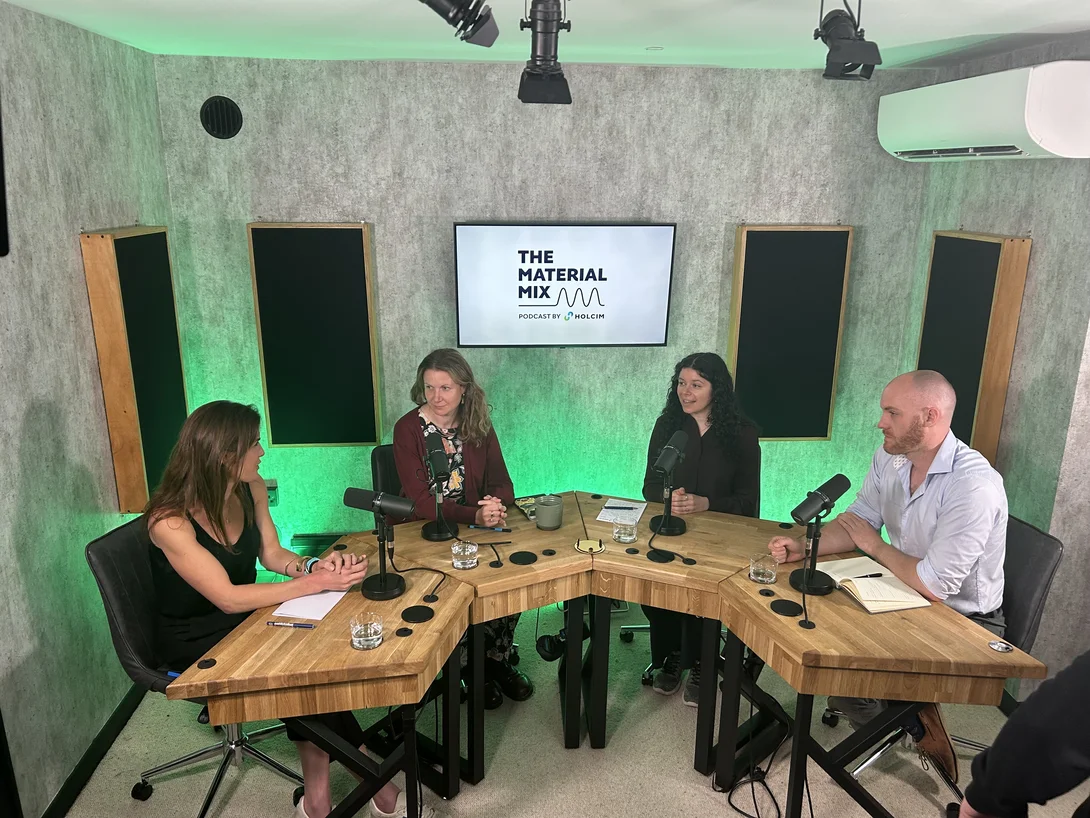
As the sector works to cut carbon emissions, enhancing biodiversity must become an equally important part of creating a more sustainable built environment.
Dr Cassandre Le Galliard, Sustainability Product Manager at Holcim UK, told the podcast: “Nature must be part of the conversation alongside carbon reduction because the nature crisis and climate change are closely connected. We cannot tackle climate change without restoring and protecting our natural resources.”
Le Galliard continued: “In the past few years, as an industry, we’ve spent a lot of time looking at carbon emissions, so we are much better informed. Organisations and government have introduced more schemes around carbon because people understand its value. With nature, the industry is playing catch-up and is only now starting to develop and implement proactive nature recovery and damage mitigation programmes. There’s a long journey ahead, but we need to look at everything together as one nature-based environmental system.”
Reducing carbon emissions is crucial as the industry works towards the UK’s legally binding 2050 net zero target. However, measuring, managing and mitigating harm to biodiversity presents a different challenge because nature is interconnected and success cannot be captured through a single metric.
Laura Homfray, Technical Lead for Nature Strategy and Reporting at Arup, said: “One of the challenges with nature is its complexity. It relies on interconnected systems and is shaped by what is happening across the wider environment. Carbon, by comparison, has a clear metric in tonnes sequestered. What gets measured gets managed.”
Despite that complexity, the podcast panel agreed that the industry needs meaningful ways to assess and track its impact on nature if it is to make measurable progress. Policies such as Biodiversity Net Gain, which require developments to deliver a measurable increase in biodiversity, and the Urban Greening Factor, which assesses the green infrastructure included in a development, are helping to shift the focus from limiting environmental harm to creating positive outcomes for nature.

Homfray said: “You can have urban development, land-use change and nature working together. Policies such as the Biodiversity Net Gain mandate mean nature is increasingly incorporated into design, planning and development.
“I’ve seen a step change in the past few years since that legislation came in, particularly in the amount of biodiversity that ecologists can request be brought back onto a site. We’re no longer only mitigating the impact of construction; we’re actively contributing to and enhancing on-site biodiversity.”
Yet nature-first principles are still not standard practice across the industry. Greater consistency and clearer government guidance will be needed to accelerate adoption.
Homfray added: “I wouldn't say it's standard practice to operate with nature-first principles and, to have that paradigm shift, I think we would need more guidance from government.”
Fellow panellist Niall Williams, former Trustee of the Landscape Institute and Director of ND Landscape Architects, broadened the podcast discussion to the social, health and wellbeing benefits of the natural environment, arguing that these should be reflected in development decisions.
He said: “Nature has so many other values that are intangible and should be factored into the discussion. If you look at preventative healthcare, for example, we know there are significant benefits for health outcomes and recovery times. That’s never mentioned in discussions about designing new buildings, and it should be.”
The panel concluded that closer collaboration between government, designers and developers, backed by measurable nature-first targets, would help turn emerging good practice into a more consistent industry approach.
The full panel discussion features in Desiging with Nature: From Placemaking to Placekeeping, the latest episode of Holcim UK’s The Material Mix podcast, exploring how nature is shaping decisions across design, planning and construction.
Press contacts
Telephone
01530 510066
Email
"We cannot tackle climate change without restoring and protecting our natural resources.”
- Construction Industry Leader Commits to Ambitious Sustainability Mission With Rebrand To Holcim UK
- Head office has a bright future after adopting solar power
- Glensanda 200 millionth tonne sets sail
- 2025 edie Awards: Holcim UK scoops double nomination
- Green shoots of growth start to flourish in sustainability efforts
- Holcim UK Welcomes First Ship To New Deep-Sea Cement Terminal at the Port of Southampton
- Key construction milestone reached with inflation of ground-breaking dome silo at Tilbury Docks
- Strengthening UK Infrastructure Resilience: Holcim UK Calls for Urgent Action Following ‘Biblical’ Rainfall