


General purpose vs Sulphate-Resistant Cement
Most builders have a bag of general purpose cement on site. It works for brickwork, renders, screeds and a dozen other jobs, so it becomes the default. Grab a bag, mix it up, get on with the job. That habit is obviously fine for work above ground. Below ground, its use can quietly cause serious structural damage. The choice between general purpose (GP) and sulphate-resistant (SR) cement is rarely about structural strength. Brand depending, both will set and both will carry load, but chemical resistance to the specific environment is what separates them, specifically how each cement performs when it comes into prolonged contact with the compounds found in soil and groundwater. That distinction matters enormously for foundations, drainage and any concrete placed below the surface, where sulphates and chlorides can cause concrete to weaken, expand and crack from the inside out.
Key takeaways
- Below-ground rule: General purpose cement is highly versatile but vulnerable to chemical attack in sulphate-rich soils, heavy clays and aggressive groundwater.
- Sulphate risk: Naturally occurring sulphates react with the tricalcium aluminate (C₃A) in standard cement, causing internal expansion, cracking and structural failure.
- Chloride risk : Chloride ingress is a separate but related threat below ground, gradually weakening and cracking foundations over time.
- SR solution: Sulphate-Resistant cement, such as Holcim's ECOPlanet Endure, is engineered with very low C₃A levels to resist chemical attack and protect foundations.
- Cost vs value : SR cement carries a slight premium per bag. But using general purpose cement in aggressive environments instead is a false economy, risking disastrous foundation replacement costs and callbacks that damage your reputation as a tradesperson.
General Purpose Cement as the versatile all-rounder
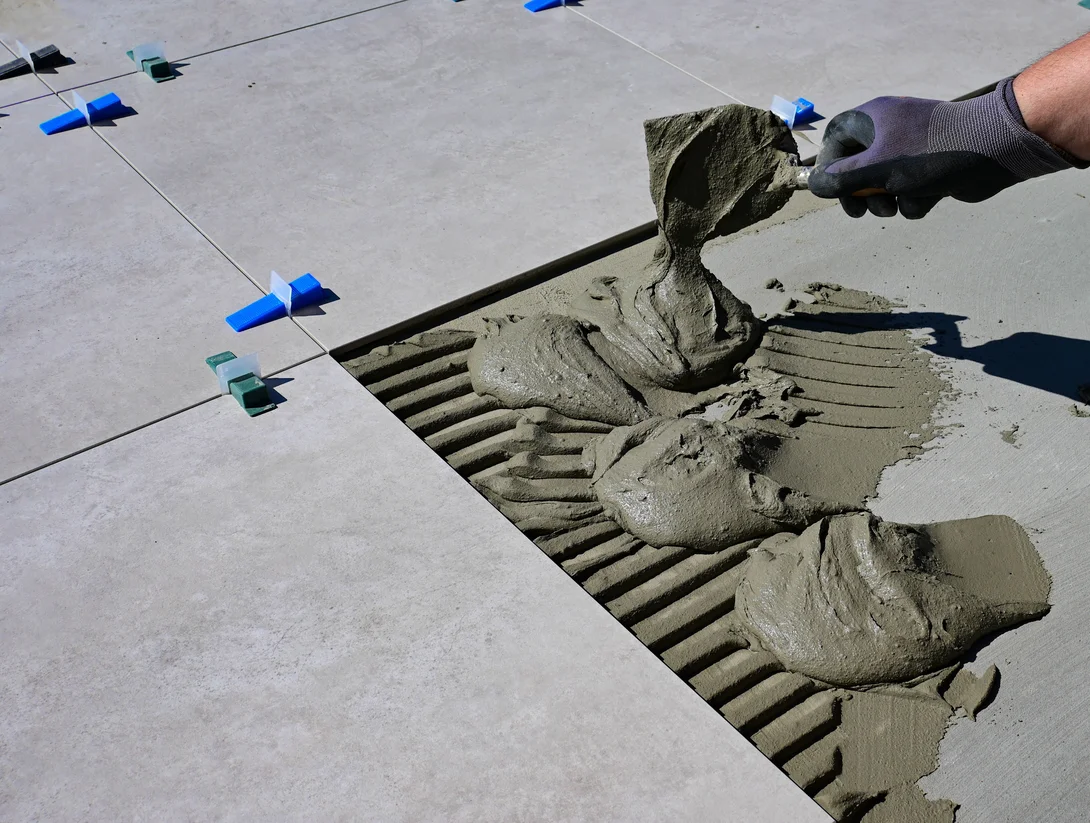
Holcim’s General Purpose Cement, including GP Plus, is the workhorse of the construction site, offering excellent workability, reliable early strength gain and strong cost-effectiveness across a wide range of standard applications.
For most above-ground work, it’s exactly the right material for the job. It’s been the industry standard for decades precisely because it performs consistently across so many common tasks. Mixed correctly and applied to the right surfaces, it delivers dependable results without complication.
Its ideal applications include:
- Bricklaying and blockwork mortars
- Renders and pointing
- Floor screeds
- Above-ground concrete slabs
- General DIY construction and repair projects
Where GP cement works best is in straightforward, above-ground environments where soil chemistry is not a factor. The tendency to reach for a familiar material without stopping to consider whether the conditions demand something different is where problems begin. On many sites, particularly those involving extensions, new builds or groundworks in clay-heavy areas, those conditions do demand something different.
What sulphates are and the threat they pose
Sulphates are naturally occurring salts found widely across UK soils, particularly in heavy clay and in groundwater. They are classified by severity from DS-1 (low risk) to DS-5 (highly aggressive), as set out in BRE Special Digest 1, which is referenced by the NHBC and used as the basis for foundation specification across the UK.
The distribution of sulphate-bearing soils across the UK is broader than many builders assume. Heavy clays are common across large parts of England, and groundwater in low-lying or previously industrial areas can carry elevated sulphate concentrations, regardless of the visible soil type. A site that looks straightforward on the surface can present significant chemical risk at foundation depth.
In many parts of the country, builders are unknowingly placing standard cement into ground that carries a genuine chemical risk. The consequences do not show up immediately, which is part of what makes them so costly.
The simple science behind C₃A
Standard cement contains a compound called tricalcium aluminate (C₃A). When C₃A comes into contact with water and soil sulphates, a chemical reaction produces a new compound called ettringite, which takes up significantly more volume than the original material. The concrete expands internally and that expansion has nowhere to go, so it forces cracks through the structure, progressively destroying the foundation's integrity from within.
Chloride ingress compounds this risk further. Chlorides present in soil and groundwater penetrate the concrete matrix over time, attacking the structure at a chemical level and causing additional weakening and cracking. Together, sulphate attack and chloride ingress represent the two primary chemical threats to below-ground concrete, and general purpose cement is not formulated to resist either of them effectively.
It’s worth noting that these processes are slow and cumulative. A foundation laid with the wrong cement may show no visible problems for several years. By the time cracking becomes apparent, the damage to the structure beneath is typically well advanced, and the cost of remediation reflects that.
Below-ground defence with sulphate-resistant cement
ECOPlanet Endure is Holcim's Sulphate-Resistant cement, engineered specifically for aggressive below-ground environments. Where standard cement contains C₃A levels that leave it vulnerable to chemical attack, ECOPlanet Endure is manufactured with very low C₃A content, typically under 5%, stopping the damaging reaction before it can begin.
It also has a lower heat of hydration than general purpose cement. In deep or thick foundation pours, heat build-up during curing can cause thermal cracking. The reduced heat output of SR cement lowers that risk, making it better suited to large-volume below-ground work.
Its ideal applications include:
- Strip and trench-fill foundations
- Piling Drainage and sewer works
- Agricultural buildings Coastal and marine structures
- Any concrete in contact with clay soils or aggressive groundwater
Comparing General Purpose and Sulphate-Resistant Cement
Feature | General Purpose Cement (e.g., Gp Plus) | Sulphate-Resistant Cement (e.g., ECOPlanet Endure) |
| Primary Environment | Above ground, neutral environments. | Below ground, clay soils, coastal & agricultural. |
| Chemical Difference | Standard C3A (Tricalcium Aluminate) levels. | Low C3A (prevents expansive reactions with sulphates). |
| Heat of Hydration | Normal (Faster early heat generation). | Lower (Reduces the risk of thermal cracking in mass pours). |
| Setting Time & Strength | Faster early strength gain. | Slower initial set, but higher long-term strength. |
| Risk of Sulphate Attack | High if the below ground conditions expose the cement to higher sulphate levels. | Protected (Formulated for aggressive chemical environments) |
| Cost Profile | Lower upfront cost per bag. | Premium upfront, but prevents catastrophic foundation failure. |

How to choose the right cement
SR cement does cost a little more per bag. That is a straightforward fact. But the calculation changes entirely when you consider what happens if the wrong cement is specified.
Excavating and replacing a failed foundation is not a minor cost overrun. It means programme disruption, structural remediation, potential liability and, for tradespeople, the kind of callback that damages a professional reputation built over years. A groundworker or builder who specifies correctly from the start delivers a building that performs for decades. One who cuts corners on cement type risks being called back to a problem that could have been avoided for the price difference between two bags.
If ground conditions are unclear, soil testing or a conversation with local building control will quickly establish the sulphate class of the site. That information takes the guesswork out of the decision entirely. For larger projects, a ground investigation report will typically include sulphate classification as standard. For smaller domestic jobs, a brief conversation with the local authority building control team is usually enough to confirm whether the site falls into an at-risk category.
Holcim rule of thumb
Use Holcim General Purpose Cement and GP Plus for bricklaying, rendering, above-ground slabs and standard construction.
Use ECOPlanet Endure for foundations, drainage, below-ground works and any concrete touching clay soils or aggressive environments.
Not sure which product fits your project? The Bagged Cement Guide, which you’ll find on our General Purpose Concrete page, includes a straightforward how-to-choose reference to help you specify with confidence.
Protect your build from the ground up
Getting cement specification right is one of the simplest ways to protect a project. The materials cost is small, but the cost of getting it wrong is not something most projects can absorb easily.
Specifying SR cement below ground is standard professional practice in conditions where standard cement will fail. It protects the structure, protects the client and protects your reputation as someone who does the job properly the first time. Comparing General Purpose and Sulphate-Resistant Cement
Explore our full range of bagged cements to find the exact match for your next project.